
July 9, 2026
How to Cut Losses on Junk Vehicle Disposal in Alberta
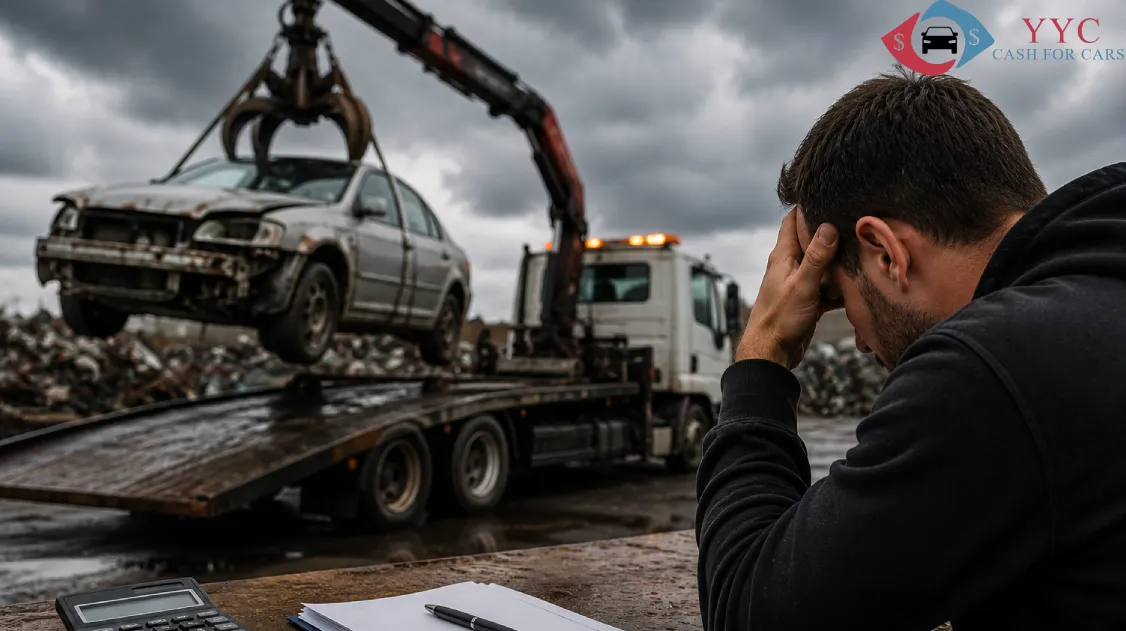
Let's be real about that car in the driveway. The one that wore a snowbank half the winter, the one you keep meaning to "deal with." It isn't just sitting there. It's quietly costing you — insurance you forgot to cancel, a registration ticking toward renewal, and a scrap value that slips a little lower every month it rusts.
Here's what most Albertans miss: getting rid of a junk vehicle isn't only about making it disappear. It's about not bleeding money on the way out. And a lot of people leave real cash on the table — sometimes a few hundred dollars — simply because they rush the last mile.
So let's slow down for ten minutes and do this properly.
Step one: stop assuming it's worthless
That rusted-out beater is worth more than you'd guess. In Alberta's 2026 market, a dead vehicle usually pulls somewhere between $150 and $2,500. A small non-running sedan sits near the bottom; a truck or SUV with a healthy engine and solid parts climbs toward the top. Weight is a big factor — more metal, more money — and a car that still starts can appraise 30 to 50 percent higher than the identical one that won't turn over.
It helps that the prairies aren't a bad place to scrap a car. Demand from Alberta's construction and oil sectors keeps recycled-steel prices reasonably healthy, so you're not starting from zero.
Then there's the catalytic converter — the sleeper asset. On a typical passenger car it can hold $75 to a few hundred dollars in recoverable precious metals, and on bigger trucks, more. Which leads straight to the mistake that costs people the most.
The "gut it first" trap
It feels clever to strip the car and sell the pieces yourself. It usually backfires.
Pull the catalytic converter on your own and you've done something that's illegal in most situations and frankly dangerous — and you've knocked a big chunk off your quote, because a car missing its converter screams "already picked over" to any buyer. The battery, a working alternator, an intact transmission — leave them where they are. A licensed recycler pays for that stuff. Yank it all and you're left selling a hollow shell by the kilo.
The only things worth removing before pickup are your personal belongings (check the glovebox, the trunk, under the seats) and your licence plates. Hang on to those plates — I'll get to why they're worth money to you in a second.
Where you sell decides how much you keep
This is the single biggest lever, and it's surprising how many people skip it: get at least three quotes.
A scrap yard values your car one way — by weight. Steel is worth pennies per kilogram, so a weight-only offer is almost always the lowest number you'll hear. A licensed auto recycler or a full-service cash-for-cars outfit looks at the same vehicle and sees resale parts, salvage demand, and metal — three ways to profit instead of one. That's why their offers routinely beat the junkyard's.
Give every buyer the exact same details — year, make, model, condition, and whether it runs — so you're comparing apples to apples. And don't treat the first call as gospel. The highest bidder is rarely the most obvious one.
Don't get played on pickup day
Alberta has its share of buyers who dangle a fat number over the phone, then "reassess" once the truck is in your driveway and you're already mentally spending the money.
Protect yourself. Get the offer in writing, with the price locked in for pickup — not "subject to inspection." Insist on free towing; if they quietly shave off a hundred bucks for the tow, that headline figure was always fiction. Skim the reviews for a pattern of honored quotes versus curbside renegotiations. And expect to show ID and proof of ownership, because Alberta law requires it for scrap sales. A buyer who waves that paperwork away isn't handing you a shortcut — he's showing you a red flag.
The refund almost nobody claims
Here's the move that separates the people who cut their losses from the people who just eat them: cancel your registration.
In Alberta, licence plates belong to you, not the car. Once the vehicle's gone, take your plate and a piece of photo ID to any registry agent and cancel the registration. Since you've most likely paid ahead, you're owed a prorated refund on the unused portion — a cheque in the mail, usually within four to six weeks, minus a small government admin fee and the registry's service charge (think ten-ish dollars apiece, not a fortune). If two names are on the registration, both owners have to sign off.
And this isn't only about the refund. Leave a vehicle registered with the plates still in your name, and any ticket, toll, or investigation tied to them traces back to you — even after the car's been crushed into a cube. Cancelling shuts that door. Money back and liability gone, in one ten-minute errand.
While you're at it, cancel the insurance you're quietly still paying, and keep the recycler's bill of sale or receipt as proof the car is no longer yours. Keeping the plates for your next vehicle? Perfect — you can transfer them. If not, destroy them with a solid bend or cut so nobody can bolt them onto another car, then recycle the aluminum.
The ten-minute version
If you forget everything else, remember this: don't strip the car, gather three written quotes from licensed recyclers instead of the first scrap yard that picks up, refuse to pay for towing, and cancel your registration for the refund and the peace of mind.
That car was never going to make you rich. But handled right, it puts a few hundred dollars back in your pocket, clears your liability, and opens up the driveway before the next snowfall — instead of quietly draining your wallet for another year. In Alberta, that's a win worth ten minutes of your afternoon.