
June 23, 2026
Does an Upgraded Sound System Increase My Car's Value?
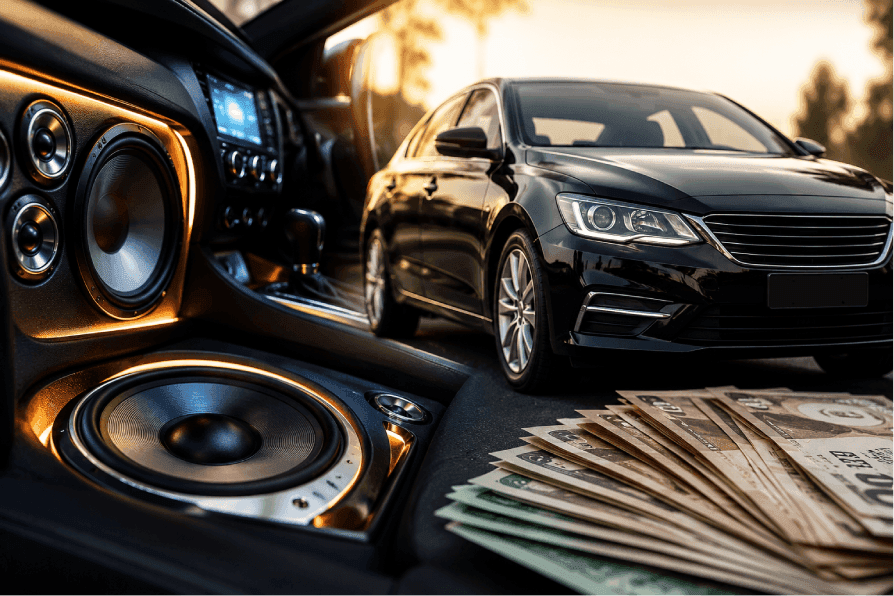
You spent $1,500 on a new head unit, a subwoofer, and a set of component speakers. The car sounds incredible. Every drive feels like a private concert. And now you are wondering: when it comes time to sell, will any of that money come back to you?
Honest answer: probably not the way you are hoping.
But the full picture is more nuanced than a flat "no," and understanding why will help you make smarter decisions both now and when you eventually sell. Let's break it all down.
The hard truth about aftermarket upgrades and resale value
Here is the thing about car value: it is not about what you love. It is about what the next buyer wants. And the next buyer is a stranger with their own preferences, their own taste in music, and possibly their own anxiety about buying a car that has been modified.
Aftermarket modifications, even expensive, high-quality ones, rarely add dollar-for-dollar value to a vehicle at resale. This applies to sound systems, custom wheels, tinted windows, and most other personalization upgrades. The reason is simple: modifications narrow your buyer pool.
A factory-spec car appeals to almost everyone. A heavily modified one appeals to people who specifically want that modification. And fewer interested buyers means less competition, which means lower sale prices.
That said, not all audio upgrades are created equal. The type of upgrade, how it was installed, and the type of vehicle you are selling all play a role. The good news is that cash for car companies buy vehicles in all kinds of conditions, modified or not.
When a sound system upgrade can help a little
There are specific scenarios where an upgraded audio system works in your favor at resale.
1. The stock system was genuinely bad
Some vehicles, particularly budget cars and older models, come with audio systems that buyers actively complain about. If you upgraded from a notoriously weak factory setup to something clean and well-integrated, buyers who care about audio will notice. It will not add $1,500 back to the price, but it might make your listing more attractive than a comparable car with the original system.
2. The upgrade looks factory
This is the golden rule of resale-friendly modifications: if it looks like it came that way, buyers accept it. A professionally installed head unit that fits the dash cleanly, speakers that sit flush in the door panels, and a subwoofer tucked neatly into the trunk are upgrades buyers do not fear. They just see a well-maintained car with good audio.
Messy installs, exposed wiring, mismatched trim panels, or a subwoofer rattling around loose in the boot? That signals corner-cutting, and it raises questions about what else might have been done carelessly.
3. You are selling to an enthusiast
Enthusiast buyers, including car audio fans and younger buyers who prioritize the driving experience, will genuinely appreciate a quality system. In certain private sale contexts, a well-documented, premium audio upgrade with quality brands like Alpine, JL Audio, Focal, or Hertz can be a genuine selling point that helps justify a slightly higher asking price.
The key word is "slightly." Do not expect to recover more than 20-30% of what you spent, and even that depends on the buyer.
When a sound system upgrade can hurt your resale value
This is where most people get surprised.
1. The original equipment is gone
Here is a scenario that plays out constantly: someone upgrades their audio, removes the factory head unit, and either loses it or throws it away. Then when it is time to sell, a potential buyer who actually wanted the original system because it integrates with steering wheel controls, the backup camera, or the vehicle's infotainment walks away.
Modern factory systems are deeply integrated with the rest of the car. Android Auto, Apple CarPlay, lane departure warnings, parking sensors, and many other features can route through the head unit. An aftermarket replacement that does not support these features is a downgrade for a significant portion of buyers, not an upgrade.
Always keep the original equipment. Box it up, store it in the garage, and offer to reinstall it for the buyer if they want it. That flexibility alone can make or break a sale.
2. The install damaged the car
Cut door panels. Drilled holes in the trunk. Modified the firewall for wiring. These things do not just reduce value; they can actively make buyers walk away. Any visible sign that the car was modified non-professionally creates doubt, and doubt kills deals.
3. It was done to a luxury or collector vehicle
If you own a BMW, Mercedes, Porsche, or any vehicle with a premium factory audio system such as Bose, Harman Kardon, Bang & Olufsen, or Burmester, replacing that system with aftermarket components almost always hurts resale. Buyers in the luxury segment expect the complete, brand-consistent experience. Swapping a Burmester system out of a Porsche for aftermarket speakers is not an upgrade in their eyes. It is a red flag.
Similarly, if you have any kind of collector or classic car, keeping it as close to factory spec as possible is almost always the right financial move.
What do the numbers actually look like?
Let's get concrete for a moment.
Say you spend $2,000 on a complete audio system upgrade: new head unit, door speakers, rear fill, and a subwoofer with amplifier. Professionally installed, looks clean.
At resale, in a private sale to a general buyer, you might recover $200-$500 in added perceived value if you recover anything at all. In a trade-in at a dealership? Almost certainly zero. Dealers price on book value and will note the modification as a neutral-to-negative factor.
The math simply does not work as an investment. But that does not mean the upgrade is wrong. It just means you should treat it as a lifestyle spend, not a financial one.
The depreciation factor nobody talks about
Here is something that gets overlooked: the car itself is depreciating the whole time your sound system is installed. So even if the audio adds some marginal value on day one, by the time you sell three or four years later, the car's overall value has dropped, and the system has aged alongside it.
A five-year-old aftermarket head unit is not as compelling to a buyer as a newer one would be. Technology moves fast in this space. The touchscreen that felt cutting-edge in 2020 might feel dated by 2025. Factor that into how much you expect to recover.
How to protect your investment if you do upgrade
If you have already upgraded, or you are planning to, here is how to minimize the resale impact and maximize your chances of recovering something.
Keep all original parts. This is non-negotiable. Store the factory head unit, speaker covers, and any trim pieces you removed. Offer them with the car or reinstall before selling.
Use professional installation. A clean, professional install preserves the car's interior integrity. DIY is fine if you genuinely know what you are doing, but if there is any doubt, pay for a pro.
Document everything. Receipts, brand names, model numbers, and installation dates matter. Buyers trust a paper trail. It shows care and makes the upgrade feel like an asset rather than a mystery.
Choose reputable brands. A Pioneer, Kenwood, JL Audio, or Focal system carries more weight with knowledgeable buyers than unbranded gear. Brand recognition matters in private sales.
Be realistic with pricing. Do not inflate your asking price by the full cost of the system. Add a modest premium, mention it prominently in your listing, and let buyers see it as a bonus, not something they are being forced to pay for.
The bottom line
Does an upgraded sound system increase your car's value? In rare cases, marginally. In most cases, no. And in some cases, it can actually work against you.
But here is the reframe that matters: if the upgrade makes every drive more enjoyable, if it brings you genuine satisfaction for the years you own the car, then the "loss" at resale is just the cost of that enjoyment spread out over time. That is not a bad deal.
The mistake is going in thinking you are making a smart financial move. You are not, and that is okay as long as you know it going in.
Buy the speakers because you love music. Keep the factory parts because you are smart. And enjoy the drive while it is yours.