
July 29, 2026
Calgary Winters Killed Your Car? Here's How to Cash In Before Spring
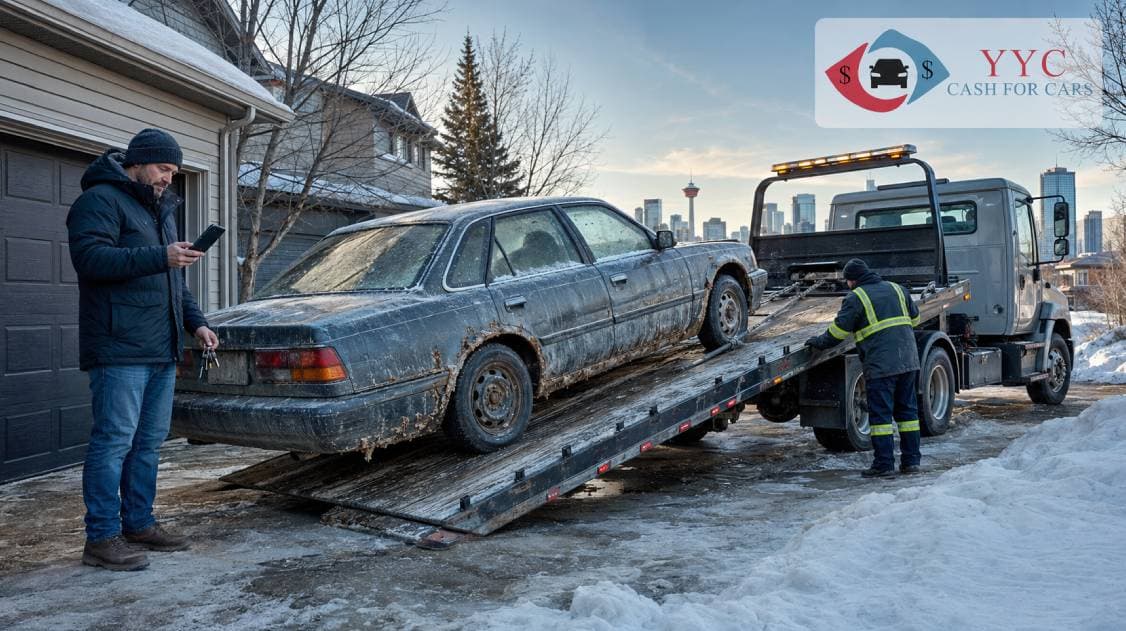
Calgary winters don't ask permission. One brutal cold snap, a few weeks of road salt and slush, a battery that finally gives up at minus thirty, and suddenly the car that got you through last year is a frozen paperweight in the driveway. Maybe it won't turn over. Maybe the rust has spread past the point of fixing. Maybe the repair estimate came back higher than the car is worth, and you just quietly stopped dealing with it.
If that's you, here's something worth knowing before the snow melts: that dead car is still worth cash. And spring is the smartest season to collect it. Let's walk through why Calgary winters are so hard on vehicles, why waiting costs you money, and exactly how to turn your winter casualty into a payout before the tulips come up.
Why Calgary Winters Are a Car's Worst Enemy
Few climates test a vehicle like ours. It's not just the cold. It's the whole punishing cocktail.
Road salt and de-icing brine are the quiet killers. They cling to the undercarriage all season, accelerating rust on brake lines, fuel lines, and frame components. By the time you notice it, the corrosion is often structural. Then there are the freeze-thaw swings that Calgary does so well: a chinook can send temperatures soaring, only to plunge again overnight. That constant expansion and contraction cracks seals, stresses the battery, and thickens fluids until your engine struggles to turn over.
Add block heaters that get forgotten, tires that lose pressure in the cold, and potholes that open up like craters after every thaw, and you've got a recipe for a car that limps into March and simply doesn't limp back out.
The Hidden Cost of Letting It Sit Until Summer
The tempting move is to do nothing. "I'll deal with it when it's warmer." It feels harmless. It isn't.
Every week that dead car sits, the winter damage keeps working. Salt residue on the undercarriage doesn't stop corroding just because the car isn't moving. Moisture and road grime continue to eat away at metal, which means the scrap value slowly shrinks. Meanwhile, if the vehicle is still registered and insured, you're paying month after month for something you can't drive.
There's also the space it's stealing. As soon as the weather turns, you'll want that driveway or garage bay back for the projects and vehicles you actually use. And in many Calgary communities, an obviously inoperable car sitting in view can attract bylaw complaints once neighbours are outside again. Waiting doesn't make the problem smaller. It makes it more expensive.
Why Spring Is the Best Time to Scrap
Here's the strategic part most people miss: timing matters when you sell a scrap car.
Spring tends to be an active season for the scrap and salvage market. Buyers are gearing up after the quiet, storm-choked winter months, roads are clear enough for easy towing, and demand for used parts climbs as people get their fair-weather vehicles road-ready. That combination often works in your favour when you're asking for a quote.
Scrapping before the deep melt also means you beat the rush. Every Calgarian with a winter-killed car has the same "I'll deal with it in spring" plan, so the smart move is to act early in the season, while buyers have room in their schedules and you get first pick of same-day pickup slots.
What Your Winter Casualty Is Actually Worth
You might assume a car that won't start is worthless. Far from it. Scrap car payouts are based on what the vehicle is made of and what can be salvaged, not whether it runs.
Your quote is built from the recyclable metal in the body, steel, aluminum, and copper all carry market value, plus any parts still worth reselling. Even a frozen, rust-bitten car often has a functional transmission, usable doors and glass, or a catalytic converter, and that converter alone can carry meaningful value thanks to the precious metals inside.
A few factors move the number: heavier vehicles like trucks and SUVs generally scrap for more, a complete car with its engine and catalytic converter intact beats one that's been stripped, and current scrap metal prices set the baseline. The best Calgary buyers fold all of this into one firm offer and tow the car for free, so the number they quote is the number you keep.
From Frozen to Funded: How the Process Works
The good news is that getting rid of a winter casualty is refreshingly simple.
Start by requesting a quote with your car's year, make, model, and honest condition, including what winter did to it. A reputable buyer gives you a firm price rather than a vague guess. Once you accept, you book a pickup, and many Calgary services offer same-day or next-day removal with a tow truck that comes to you. That's essential when your car is a solid block of "not moving." When they arrive, they confirm the vehicle, hand you your payment, and haul it off, usually in under half an hour.
Don't Forget the Paperwork and Plates
Before the car leaves, handle a few Alberta essentials. You'll generally need proof of ownership and government-issued ID. Remove your licence plates. In Alberta, plates stay with you, so you can return them to a registry or transfer them to your next vehicle. Cancel the insurance once the car is gone, and do a quick sweep for personal items: winter emergency kits, garage remotes, sunglasses, and paperwork have a way of hiding under seats.
Beat the Melt and Cash In
That winter-killed car isn't coming back to life, but it can still do you one last favour. Instead of watching it corrode through another season and drain your wallet on registration you don't use, you can trade it for cash and reclaim your space before spring is in full swing.
The metal is worth the most right now, buyers are busiest and most generous in the season ahead, and the sooner you act, the sooner that frozen problem becomes found money. Grab your ownership papers, get a quote, and let this be the last Calgary winter that car ever ruins.