
May 11, 2026
Unspoken Rules and Junkyard Etiquette — Tips Nobody Tells You
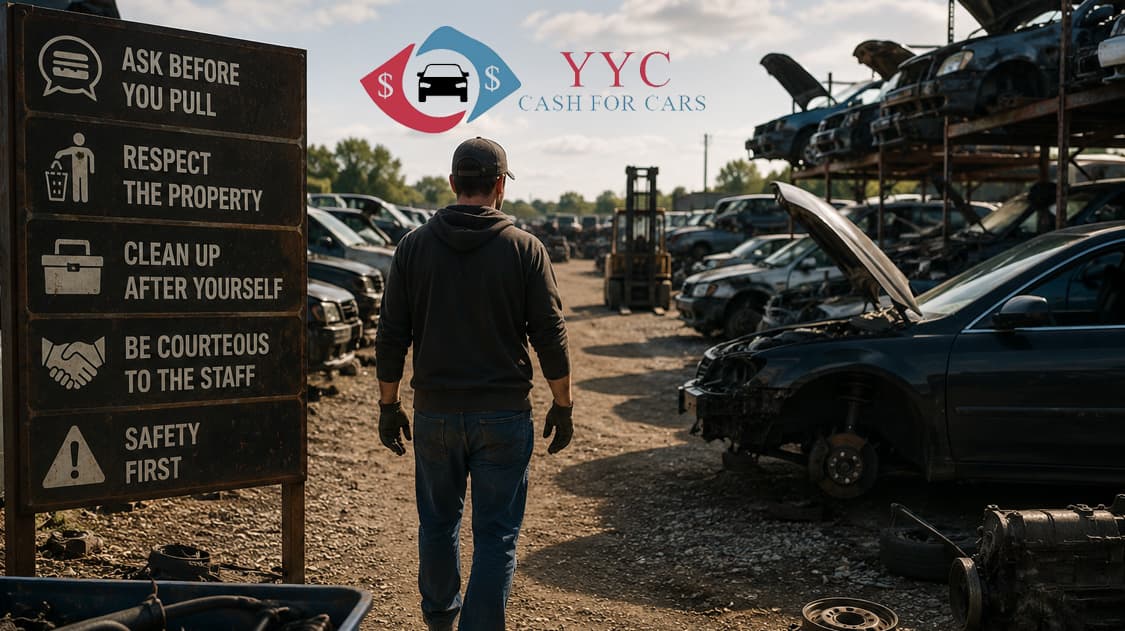
Junkyards run on rules. Some are on the gate. Most aren't.
The ones on the gate are easy. No kids under 16, closed shoes, sign the waiver, don't walk out with stuff you didn't pay for. Cool. Read it, sign it, move on.
The other rules though — the stuff that makes staff like you, gets you better offers, keeps you from being the person everyone is venting about by lunch — those rules nobody writes down. So I'm writing them down. Whether you're pulling a fender off some 2008 Camry or rolling in with a dead minivan to sell, this is what actually matters once you're on the lot.
If you're going to buy parts
Look, walking in cold and "seeing what's around" sounds chill but it almost never works. Yards are sorted lots with cataloged inventory. The people who get the most out of a visit walk in knowing exactly what they want. So here's the prep that pays off:
- Know your year, make, model, and trim. Trim matters more than people think. A base Corolla doesn't share half the parts you'd assume with the LE trim two stalls over.
- Have a backup donor car in mind. Your first pick has probably already been picked through. Always have a Plan B Civic, Plan B F-150, whatever.
- Call ahead or check inventory online. Five minutes on the phone beats an hour walking rows in the rain. If a yard won't share inventory info, that tells you something. Not a deal-breaker but worth noticing.
- Bring real tools. Sockets, breaker bar, penetrating oil, gloves, flashlight, those interiors are dark even at noon, and an old towel or piece of cardboard to lay on. Don't be the guy asking strangers if they can borrow a 14mm. They will remember your face.
Now once you're actually in there, pulling parts, here's the stuff people mess up:
- Don't strip parts you're not buying. This is the unforgivable one. If you pull a wheel to get at something behind it, put the wheel back. If you take a bolt out of a bracket, leave the bracket. The next customer who needs that bracket comes back swearing, and now the yard has one less thing to sell. Yards that catch you doing this don't just kick you out. Word gets around.
- Be careful with electronics. ECUs, BCMs, instrument clusters — a lot of these are coded to a specific VIN and will not just plug into another vehicle. Ask the yard whether they warranty electronics or take returns. The reputable ones do. The cheap ones absolutely do not. A $40 part can become a $400 dealer programming bill if you guess wrong.
- Haggling is fine. Lowballing is annoying. Pull-your-own yards usually have set prices and there's no wiggle room. Full-service yards have more flex, especially on big stuff like transmissions, doors, or engines. If you're going to negotiate, do it once, do it politely, accept the answer. Coming back three times to chip at the price wears people out.
- Stay out of the wrong sections. Forklifts and tow trucks don't always see you. Stay on marked paths, don't climb on stacked cars, don't go near anything that looks like it's about to be moved. That zone in the back where you hear hydraulics? Yeah. Not your zone.
If you're selling a car
Different scene. The yard taking your call about a dead Civic is dealing with maybe a hundred sellers a week and they can spot a problem call within ten seconds. So make their job easy and they'll make yours easy back.
- Know what you actually have. Year, make, model, rough kilometres, does it run, does it have all four wheels and tires, does it still have its catalytic converter. That last one matters a lot more than people realize. Missing cats drop offers by hundreds instantly, and "oh I didn't know it was gone" is not the surprise you want when the tow truck pulls up.
- Be straight about the title situation. This is honestly the number one reason scrap deals fall apart in Canada. If the ownership isn't in your name, if it's salvage, if there's a lien, if your uncle left it to you and nobody ever transferred it — just say so when you call. Most yards can still buy it. They just need to know in advance so they can deal with the paperwork. Hiding it until pickup wastes everyone's day, yours included.
- Clear out your stuff. All of it. Glove box, centre console, under the seats, trunk, weird door pocket. Once the car leaves your driveway, it's gone. The number of folks who realize a week later that their winter tires were in the trunk, or the kid's hockey gear, or the actual ownership papers — depressing.
- Don't pull parts off it after you agree on a price. If you said it's a complete car and we priced it as a complete car, that's the deal. Taking the battery, the stereo, the wheels, and the catalytic converter the night before pickup will get the offer slashed on the spot. Or the whole deal cancelled. Want to pull stuff first? Say so before quoting and expect a lower number.
- Be there for pickup, or arrange someone who can be. Drivers need a signature. They need keys if you have them. They need to confirm the car is what was quoted. Ghosting a pickup window doesn't just inconvenience the driver. It costs the yard money. Your next call there will be answered very differently.
The one rule that covers everything else
Treat the yard like someone's workplace. Because that's what it is.
The folks in the office, the drivers, the mechanic in coveralls, the cashier with the radio on — they're just trying to get through a Tuesday like anyone else. Be straight with them. Be patient. Be the customer they actually want to deal with.
You'll get better prices. Better service. And the kind of small favours that nobody ever puts in writing.