
April 14, 2026
The Helpful Catalytic Converter Scrap Value Guide
What nobody tells you before you get lowballed — and how to actually know what you're holding
You know what's funny about catalytic converters?
Almost nobody thinks about them until something goes wrong. Either they wake up one morning, start their car, and it sounds like a fighter jet taking off from their driveway — because someone crawled under overnight and cut the thing off. Or they're in the middle of scrapping a vehicle and the buyer suddenly gets very interested in whether the converter is still attached.
Both moments have something in common. The person on the other end of that situation — the theft victim, the car seller — almost always wishes they'd understood this component better before that moment arrived.
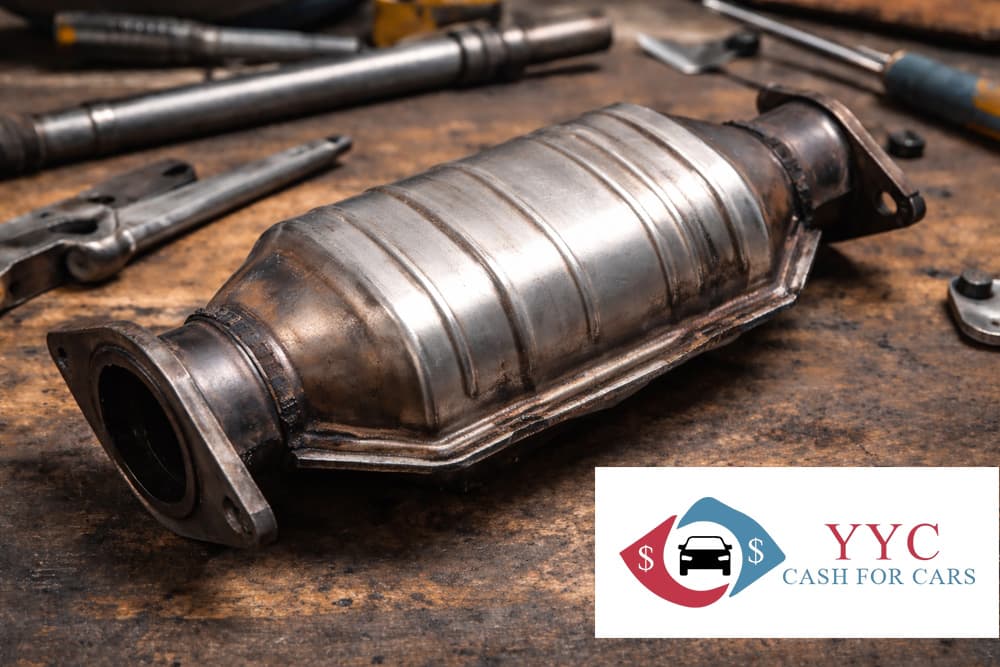
Here's the thing though. The catalytic converter is probably the least glamorous part of any vehicle. It sits underneath the car, gets ignored completely during routine maintenance conversations, and looks like nothing more than a metal box attached to some pipes. Nothing about it screams "valuable." And that's exactly the problem. Because what's inside that unremarkable shell is genuinely surprising — and understanding it changes how you think about your vehicle, your scrap quote, and what you're actually owed when it comes time to sell.
So let's get into it. No textbook language, no runaround — just what you actually need to know.
The Real Reason These Things Are Worth Anything
Okay so here's where most people's eyes go wide a little bit.
A catalytic converter does its job — turning nasty engine exhaust gases into cleaner emissions — through a chemical process. That process needs a catalyst to work. And the catalyst happens to be made from some of the most expensive metals on the planet. We're talking platinum, palladium, and rhodium. Three precious metals that make gold look almost ordinary by comparison.
Rhodium in particular has had moments where it traded above $20,000 per troy ounce. Palladium has pushed past $2,800. Platinum sits more modestly but still hovers around the $900–$1,100 range depending on when you're checking.
Now — the amounts inside any single converter are small. A few grams. Not handfuls. But when you do the math on even three or four grams of palladium at current prices, you start to understand why a random person would crawl under a stranger's car with a battery-powered saw at two in the morning. The catalytic converter value isn't theoretical. It's real, it's measurable, and it's why this component gets treated differently than literally every other part of your vehicle when scrap time comes around.
When your car goes to a legitimate recycler, those metals get extracted through a smelting process and re-enter the global precious metals supply chain. The recycler pays you based on what they expect to recover. That's the whole equation.
Why the Same Part Is Worth Completely Different Amounts on Different Cars
This confuses people and honestly it's a fair thing to be confused by. Two catalytic converters sitting side by side can look almost identical and have a price difference of $800 between them. Here's why.
Different vehicles require different precious metal formulations to meet emissions standards. It's not random — it's engineering. A hybrid vehicle like the Toyota Prius has an engine that starts and stops constantly. That means the catalytic converter has to work harder and needs a higher precious metal load to stay effective across those constant thermal cycles. More precious metal content equals higher catalytic converter value at scrap time. Simple as that.
Vehicles that typically carry higher value converters:
- Toyota Prius and hybrid models — this is the one everyone talks about, and for good reason. Prius converters are stolen constantly because their value is genuinely significant compared to most other vehicles on the road
- Large trucks and full-size SUVs — particularly American-made ones. Bigger engine, bigger converter, more metal content. Some trucks run dual converters which doubles the equation
- Luxury brands — BMW, Mercedes-Benz, Lexus. Premium vehicles use premium components and the converter is no exception
- Honda CR-V, Accord, and similar high-volume models — not necessarily because of precious metal concentration but because parts from common vehicles are always in demand, which keeps values steady
Vehicles typically at the lower end:
- Older small sedans from the late 1990s and early 2000s
- Any vehicle where the original converter was replaced with a cheaper aftermarket unit — those contain less precious metal by design to keep production costs down
- Vehicles where the converter suffered internal damage from engine misfires or overheating, which degrades the internal structure that holds the metals
If you've ever wondered why your neighbour got a noticeably different scrap quote than you did for what seemed like a similar vehicle — this is often a significant part of the reason.
Getting an Honest Number Before You Call Anyone
Here's where preparation actually pays off in a practical sense.
Most people walk into a converter transaction knowing nothing, which means they have no way to evaluate whether the offer they're receiving is reasonable or not. That information gap is where lowball offers thrive.
Before you contact anyone about a converter — whether it's attached to a vehicle you're scrapping or a standalone situation — here's what to do:
- Write down your exact vehicle details — year, make, model, and engine size. If you can find a serial number stamped on the converter body itself, write that down too. That serial number allows a recycler to identify the exact unit and its expected precious metal yield
- Look up current spot prices for platinum, palladium, and rhodium — a quick search takes two minutes and gives you real context. You don't need to become a commodities trader. You just need to know whether metal prices are currently high, low, or somewhere in the middle
- Search your specific vehicle alongside "catalytic converter value" — you'll find reference ranges that give you a ballpark before anyone quotes you a number
- Call at least two or three buyers — this step genuinely matters. The variation in offers for the same converter between different buyers can be $100 to $300 or more. That's not a small difference. It reflects different processing relationships, current inventory levels, and honestly just different business practices
The whole preparation process takes maybe thirty minutes. The return on that thirty minutes can be substantial.
Things That Quietly Kill Your Converter's Value
Beyond the obvious factors, there are a few things that reduce what you'll get that people don't often think about going in.
Internal heat damage is probably the most common one. Engine misfires — those moments where the engine stumbles and unburnt fuel gets pushed into the exhaust — send fuel into the converter where it ignites. That creates temperatures far beyond what the unit was designed to handle. The internal ceramic honeycomb structure that holds the precious metals can crack, melt, or partially collapse. Less intact structure means less recoverable metal, which means a lower offer. If your vehicle had a check engine light running for an extended period related to misfires, there's a reasonable chance the converter took some damage.
Aftermarket replacement units are worth knowing about because they catch people off guard. If your vehicle had its original converter replaced at some point — maybe after a theft, maybe just as a repair — the replacement almost certainly contains less precious metal than the original equipment part. Aftermarket converters meet emissions standards but do so with less precious metal content to keep costs down. An experienced recycler will identify this and adjust their offer accordingly. It's not a scam — it's just a real difference in what's actually there.
Physical crushing or impact damage reduces access to the metals during processing. A converter that's been hit by road debris or crushed during an accident still has value — but less of it.
Frequently Asked Questions
1. How do I find out what my specific converter is actually worth before I sell it?
Start with your vehicle's year, make, model, and engine size — that combination narrows down which converter type you have significantly. If you can locate a serial or part number on the converter body itself, that's even better because it allows precise identification. From there, cross-reference with current precious metal spot prices to understand the market environment. Then reach out to two or three local recyclers and compare. Online reference databases for converter values exist and are worth consulting — searching your exact vehicle details alongside current catalytic converter value references will give you a reasonable range to work with before anyone puts a number in front of you. The goal isn't to become an expert. It's just to walk in with enough information that you recognize a fair offer when you see one.
2. Does it ever make sense to sell my converter separately instead of leaving it with the vehicle?
Occasionally yes, but it depends on your specific situation. If you're selling a complete vehicle to a scrap or cash for cars service, leaving the converter attached usually works in your favour — the buyer factors it into their overall vehicle offer and you avoid the hassle of a separate transaction. Where selling separately makes more sense is if you already have the converter removed — perhaps it was stolen and then recovered, or the vehicle was already scrapped — and you want to take it directly to a precious metals specialist who focuses exclusively on converter recycling. Those specialists sometimes offer better rates than general scrap yards because they have more direct processing relationships. Compare what each route actually pays before you decide.
3. Why do different recyclers offer such different prices for the exact same converter?
Several real reasons drive this and none of them are necessarily dishonest. Different recyclers have different relationships with the smelting operations that actually extract the precious metals — those with better processing contracts can afford to pass more value back to sellers. Current inventory also matters — a recycler holding a lot of a particular converter type right now may offer less simply because they're not short on supply. Some buyers specialize in specific vehicle makes and have sharper intelligence on those units' actual metal content, which lets them price more accurately. The practical lesson from all of this is that getting multiple quotes is not paranoia or hassle — it's just smart. The spread between the lowest and highest offer for the same catalytic converter across different buyers is often more than people expect.
4. My converter was stolen and then partially recovered — does a damaged one still have any real value?
Yes, almost always. Even a damaged or partially compromised catalytic converter retains some precious metal content — the metals don't disappear because the unit was damaged, they're just potentially harder to recover in full. Physical damage, cracking of the internal ceramic substrate, or partial destruction reduces the yield a recycler can extract, which reduces what they'll pay — but it doesn't bring the value to zero. Have a reputable recycler assess the specific damage and give you an honest evaluation of what's recoverable. That number will almost certainly be better than you're expecting, especially if the converter is from a vehicle known for higher precious metal content.
5. What are the legal requirements around selling a catalytic converter for scrap in Alberta?
They've tightened up in recent years and for genuinely good reasons. Converter theft became significant enough that provincial regulations now require licensed metal recyclers to collect identification from sellers, maintain detailed transaction records, and in many cases observe waiting periods before processing purchased units. These measures exist to create accountability and make the stolen converter pipeline harder to exploit. As someone selling a converter from a vehicle you legitimately own, compliance is straightforward — have your ID and vehicle ownership documentation available, and work exclusively with licensed, established recyclers who follow the rules. Any buyer who wants to skip identification or paperwork entirely is not worth the risk, regardless of what price they're offering. Protecting yourself legally is more important than squeezing an extra twenty dollars out of a transaction.
What to Take Away From All of This
Catalytic converters aren't complicated once you understand the basics. Precious metals inside, market prices outside, vehicle type in the middle determining how those things connect. That's really the whole picture.
What changes when you understand it properly is that you stop being a passive participant in conversations about value. You can ask better questions. You can evaluate offers with actual context instead of just hoping the number sounds about right. You can recognize when something is off.
- Platinum, palladium, and rhodium are what give converters their scrap value — not the steel shell
- Vehicle make and model is the single biggest factor separating a $100 converter from a $1,000 one
- Market prices move constantly — awareness of current metal prices helps you time and evaluate transactions
- Multiple quotes are non-negotiable — the variation between buyers is real and significant
- Documentation and licensed buyers only — proper paperwork protects you and keeps everything legitimate
You now know more about catalytic converter scrap value than the majority of people who sell them every day. Use that.