
April 17, 2026
The Green Side of Selling Your Old Car for Cash in Didsbury
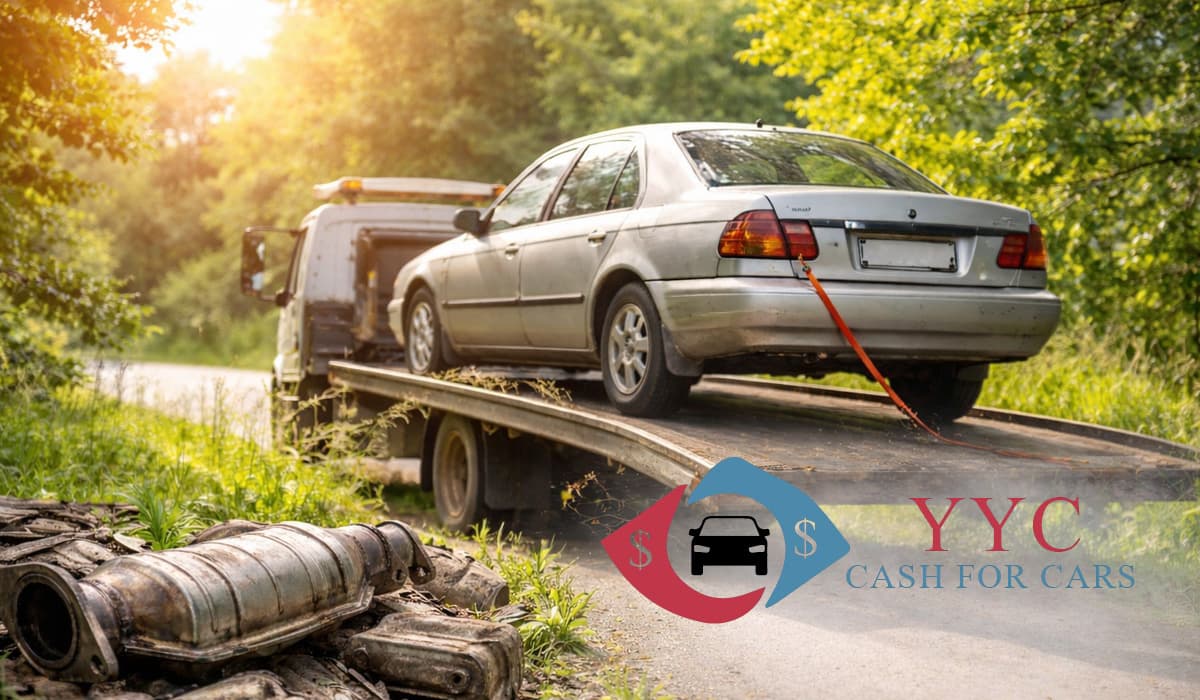
You know what's funny? People will spend twenty minutes researching which reusable coffee cup is most eco-friendly, swap out their light bulbs for LEDs, and religiously separate their recycling — and then completely ignore the two-tonne chemical time bomb quietly rusting away on their driveway.
No shade. Most people don't connect those dots. Why would you? A car just looks like... a car. Even a broken one. It's not obviously leaking, it's not smoking, it's just sitting there being useless. Harmless enough, right?
Not quite. And once you understand what's actually going on inside a vehicle that's been left standing for months — or years — the picture changes pretty fast.
That Old Car Is Doing More Damage Than You Think
Let's get into the uncomfortable bit first, because it's worth knowing.
A car that's no longer being driven is still full of fluids. Engine oil. Coolant. Brake fluid. Power steering fluid. Fuel residue. Battery acid. Under normal conditions — regular use, regular servicing — these are managed, contained, topped up or replaced. But in a vehicle that's just sitting? They start to break down. Seals degrade. Joints dry out. And slowly, quietly, these fluids find their way out.
Into the ground beneath your driveway. Into drainage channels. In worst-case situations, into the local water system.
It's not dramatic or sudden. That's actually the problem — it happens slowly enough that nobody notices until it's already done. Didsbury is a dense residential area. Gardens backing onto each other, older driveways, streets close together. The cumulative effect of multiple abandoned vehicles in a small area genuinely matters, even if each individual car seems insignificant on its own.
This is what proper scrap cars for cash Didsbury services quietly solve — not just the inconvenience of having an unwanted car, but the environmental leak that comes with leaving it alone.
The Recycling Numbers Are Actually Impressive
Right, so here's the part that genuinely surprised me when I looked into it properly.
When a vehicle goes through a licensed scrapping facility — the kind that a reputable scrap car removal Didsbury company uses — it doesn't just get crushed and dumped somewhere. It goes through a structured process that's tightly regulated by the Environment Agency. And the recycling rates are, honestly, better than most people expect.
Around 80% of a modern car gets recycled or reused in some form. Think about that against, say, a plastic bottle or a cardboard box. The infrastructure built around vehicle recycling is genuinely robust.
Here's roughly what happens to your car once it arrives at an Authorised Treatment Facility:
All hazardous fluids get drained first — every drop of oil, coolant, and brake fluid removed and collected before anything else happens. This alone is the most environmentally critical step.
The battery comes out separately and heads to a specialist recycler. Car batteries are full of lead and acid — they need careful handling, not just tossing in a skip.
The catalytic converter gets recovered. These contain small but genuinely valuable amounts of platinum, palladium and rhodium — precious metals that can be extracted and reused rather than mined fresh.
Usable parts — doors, engines, lights, seats, gearboxes — get pulled and sold on. Someone's repair job next month might be using a component from your old car.
What's left gets shredded. The steel gets melted down and recycled. Producing recycled steel uses somewhere around 75% less energy than making new steel from iron ore. That's not a rounding error. That's a massive difference.
Compare all of this to what happens when a car gets abandoned, sold to an unlicensed trader, or left to deteriorate — and the gap is stark.
There's a Real Cost to Just Leaving It
Something I think gets overlooked is the opportunity cost side of this.
Every week your old car sits there unprocessed, parts that could be salvaged and reused are degrading. Rubber perishes. Electronics corrode. Fluids break down further. A car that might have had £200 worth of reusable components in January could be worth considerably less by June — not because the scrap metal changed in value, but because the salvageable parts have gone past the point of being useful.
There's also the question of what doesn't get made because your parts were reused. Every component pulled from a scrapped vehicle and sold on is one fewer component that needs manufacturing from scratch. Less energy used. Less raw material extracted. Less transport involved in production.
It's not flashy, this kind of environmentalism. There's no campaign for it. But the logic is pretty solid when you follow it through.
The EV Switch — and Why Your Old Car Matters Here Too
A lot of Didsbury residents are going electric right now, or at least seriously thinking about it. Understandable. The running costs alone make a compelling case, let alone the emissions reduction.
But here's a detail worth sitting with: manufacturing a new car — electric or not — has a substantial carbon footprint. The production of an EV battery alone involves significant mining and energy use. That doesn't mean going electric is wrong — over the lifetime of the vehicle the numbers still stack up strongly in favour of EVs. But it does mean how you handle the car you're replacing matters more than people realise.
Getting your old vehicle processed through a proper junk car removal service is, in a very real sense, part of completing that environmental transaction responsibly. You're not just reducing future emissions by switching to electric. You're ensuring the vehicle you're leaving behind gets handled in the least damaging way possible.
The greenest version of upgrading your car includes sorting out the old one properly. That part often gets forgotten.
Why Doing It Through a Proper Service Matters
Not all scrap collection is equal. That's worth saying plainly.
There are operators out there — unlicensed, unregistered — who will take your car for free, strip anything valuable, and dump the rest in ways that create exactly the kind of environmental problems we've been talking about. No depollution. No fluid management. No recycling accountability.
A legitimate scrap cars for cash Didsbury service operates from a licensed facility, will give you a Certificate of Destruction (your legal confirmation the car has been properly processed and removed from the DVLA register), and follows the full treatment process. That certificate isn't just paperwork — it's your proof that the environmental job actually got done.
If a service can't or won't give you a Certificate of Destruction, that tells you everything you need to know about how they operate.
Small Act. Real Impact.
Nobody's asking you to chain yourself to anything or change your entire lifestyle. This isn't that kind of article.
It's just worth knowing that one phone call — getting your old car collected by a licensed scrap car removal Didsbury service — does something genuinely useful. Keeps hazardous materials out of the ground. Puts recyclable material back into the supply chain. Reduces industrial demand at the margins. Keeps the neighbourhood looking like Didsbury rather than a storage yard.
You get paid for it. The car disappears. And the environmental outcome is, without much exaggeration, the best possible result for a vehicle that's reached the end of its road.
That's a pretty good deal, all things considered.
FAQs
Q1: Is scrapping my old car actually better for the environment than selling it privately?
It depends on what happens to it next, honestly. If a private buyer genuinely uses and maintains the car, that can extend its useful life — which is fine. But if a private buyer strips it or abandons it themselves, you've just shifted the problem. Using a licensed scrap cars for cash Didsbury service guarantees the vehicle is handled responsibly, fluids removed properly, and materials recycled — that outcome doesn't depend on what a buyer does next.
Q2: How do I know the scrap car removal Didsbury company I use is actually licensed?
Ask for their Waste Carrier Licence number and check they operate from an Authorised Treatment Facility registered with the Environment Agency. And at the end of the process, they must provide a Certificate of Destruction. No certificate, no credibility — it's that simple.
Q3: My car has been sitting for two years. Is it too late to scrap it properly?
Not at all — though the sooner the better from an environmental standpoint. Two years of sitting means two years of potential fluid seepage. Junk car removal Didsbury teams collect long-stationary vehicles regularly. The age or condition of the car doesn't prevent it from being processed responsibly.
Q4: Does scrapping my car really make a difference, or is that just marketing?
It's a fair question. Individually, one car is a drop in the ocean. But the figures are real — 80% recycling rates, 75% energy saving on recycled vs. new steel, proper fluid containment preventing ground contamination. Multiply that across thousands of end-of-life vehicles per year and it adds up to something meaningful. The infrastructure exists because the impact is genuine.
Q5: Will I get a Certificate of Destruction when I use scrap cars for cash Didsbury service?
Any legitimate operator will issue one — it's a legal requirement, not a bonus. This certificate confirms your vehicle has been officially scrapped and removed from the DVLA database. Keep it. It protects you from any future fines, road tax demands, or legal issues connected to that vehicle registration.