March 10, 2026
The Ultimate Catalytic Converter Scrap Value Guide: 2026 Edition
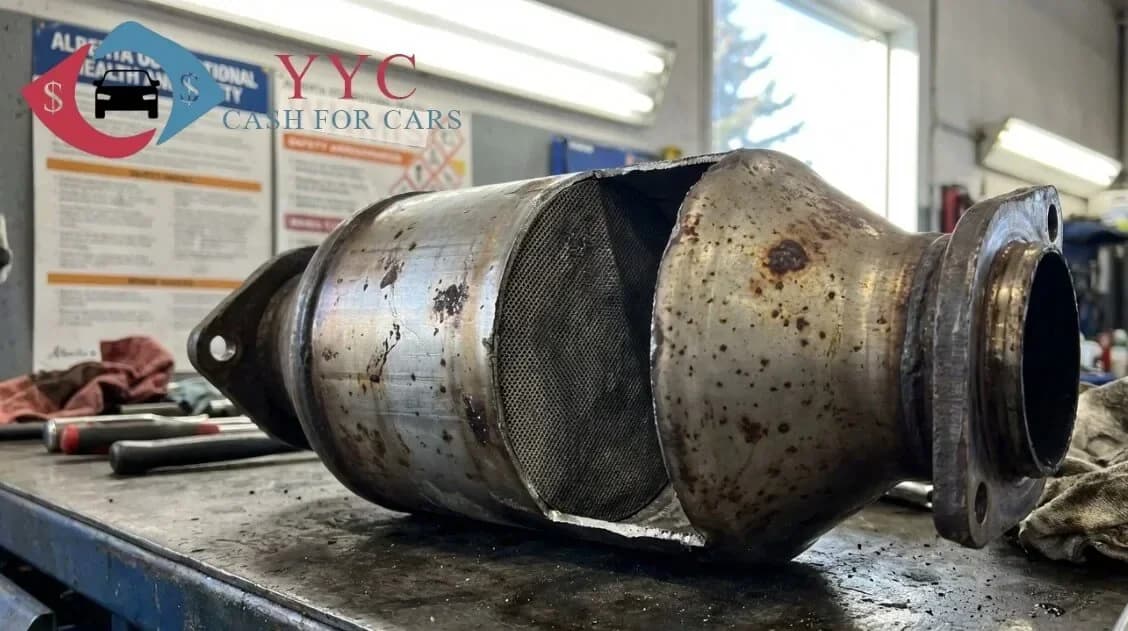
If you've got an old car sitting in your yard in Alberta or you are pondering what makes certain parts of your car now worth more than the car itself, the answer is in an "miniature treasure chest" attached to your exhaust pipe. In 2026 the market for catalytic converter scrap is more complicated than it has ever been driven by fluctuating prices for precious metals as well as new regulations from the province designed to guarantee transparency and security.
This guide will guide you through how exactly to assess the value of your converter as well as the legal requirements to sell in Alberta and the best way you can protect your vehicle from vandalism.
Why is a Scrap Catalytic Converter Worth So Much?
The function of a catalytic converter is to convert harmful engine exhaust gases into harmless CO2 and water. For this, it employs the use of a ceramic or the metallic "honeycomb" coated in Platinum Group Metals (PGMs). Even after 2026, these metals will remain vital for the control of emissions, and their scarce supply makes scrap prices very high.
The three main metals that determine the price include platinum, Palladium and the extremely precious Rhodium. Since the amount of these metals is different in different car models and brands the price of scrap can be anywhere from a few dollars to over 1,000 dollars for high-end or hybrid vehicles.
Factors That Influence the Final Price
A variety of factors determine the amount scrap buyers in Calgary can afford to purchase your scrap:
Car Types: Hybrid vehicles, like Toyota Prius, for example. Toyota Prius often have converters with higher levels of metal due to their engines running cool and they start and stop frequently.
engine size: Heavy-duty and large SUVs usually feature larger converters that have greater surface area, which leads to greater scrap payouts when in comparison to smaller economy vehicles.
OEM or. aftermarket The "Original Equipment Manufacturer" (OEM) component will almost always be worth much greater than an aftermarket substitute. Aftermarket models are made to be low-cost and usually comprise only a small portion of precious metals that are present in the original component.
How to Identify Your Converter’s True Value
For a precise price, don't depend on the weight or size of the piece. Scrap buyers value their units based on the serial number that is stamped in the case.
Step 1: Locate the Serial Number
The majority of OEM converters are equipped with 10-12 numbers. It can be engraved directly on the shell of the metal or a tiny heat shield. If the metal is in a state of rust, use a small amount of the steel wool and a wire brush, to lightly scrub your surface till the engravings are evident.
Step 2: Look for Manufacturer Logos
Alongside the serial numbers, you'll typically find logos of brands such as Ford, GM, Toyota or other specialized brands such as Bosal and Walker. The identification of the brand can help buyers to verify their PGM loading profile within their databases.
Step 3: Use an XRF Analysis
Scrap buyers who are professionals in Alberta typically make use of a handheld Xray Fluorescence (XRF) analysis device. This gadget "reads" the metal content inside the honeycomb, without having to open the honeycomb and gives you a precise amount based on the current market prices for 2026.
Selling Legally in Alberta: What You Need to Know
Alberta has passed strict laws to curb the illegal sale for scrap steel. According to the Protection of Alberta Industry from Theft Act it is mandatory to follow certain guidelines when selling the catalytic converter.
No cash to "Cats" In Alberta scrap yards are barred from settling cash for unattached catalytic converters. The payment must be made using identifiable methods, like the use of a cheque or an e-transfer. This will create a paper trail which discourages theft.
Documentation that is required If you decide to market the scrap you have collected, you must be ready to supply:
- Valid government-issued photo ID (like one like an Alberta Driver's License).
- A vehicle Identification Number (VIN) is the number of vehicles that the part came from.
- The license plate number of your vehicle.
The rules ensure that the person who sells the item has a valid justification for it, thus protecting honest sellers as well as the community in general.
How to Prevent Catalytic Converter Theft
As long as the values remain very high "cat" theft is an ongoing issue. Thieves can cut off the converter in less than 60 seconds with an electric saw. Here's how to ensure your vehicle is safe:
VIN Etching Make sure your VIN is professionally inked on the converter. The majority of scrap yards that are reputable won't buy a converter that has clearly etched with an VIN that isn't in line with the information on the seller's record.
High-Heat Paint The application of high-temperature, bright orange paint acts as a visual deterrent. It indicates to criminals that the item is marked, making it harder for them to offer to genuine buyers.
Physical barriers for vehicles that are at risk, such as SUVs and trucks, think about setting up a "Cat Shield" or a steel cage. They make the process of removing noisy and lengthy, often making it difficult for thieves to turn to a less attractive victim.
Strategic Parking When you are able, park in areas that are well-lit or near fences and walls to prevent accessibility to undercarriage of your car.
Summary: Getting the Most for Your Scrap
The process of selling a converter catalytic 2026 will require more than turning up at an auction. By cleansing your serial numbers, understanding "no cash" laws in Alberta and recognizing the distinction between aftermarket and OEM components you can be sure you receive the highest price for the scrap.